Quaine Library
St Monica’s College
Epping, Victoria Australia
2017
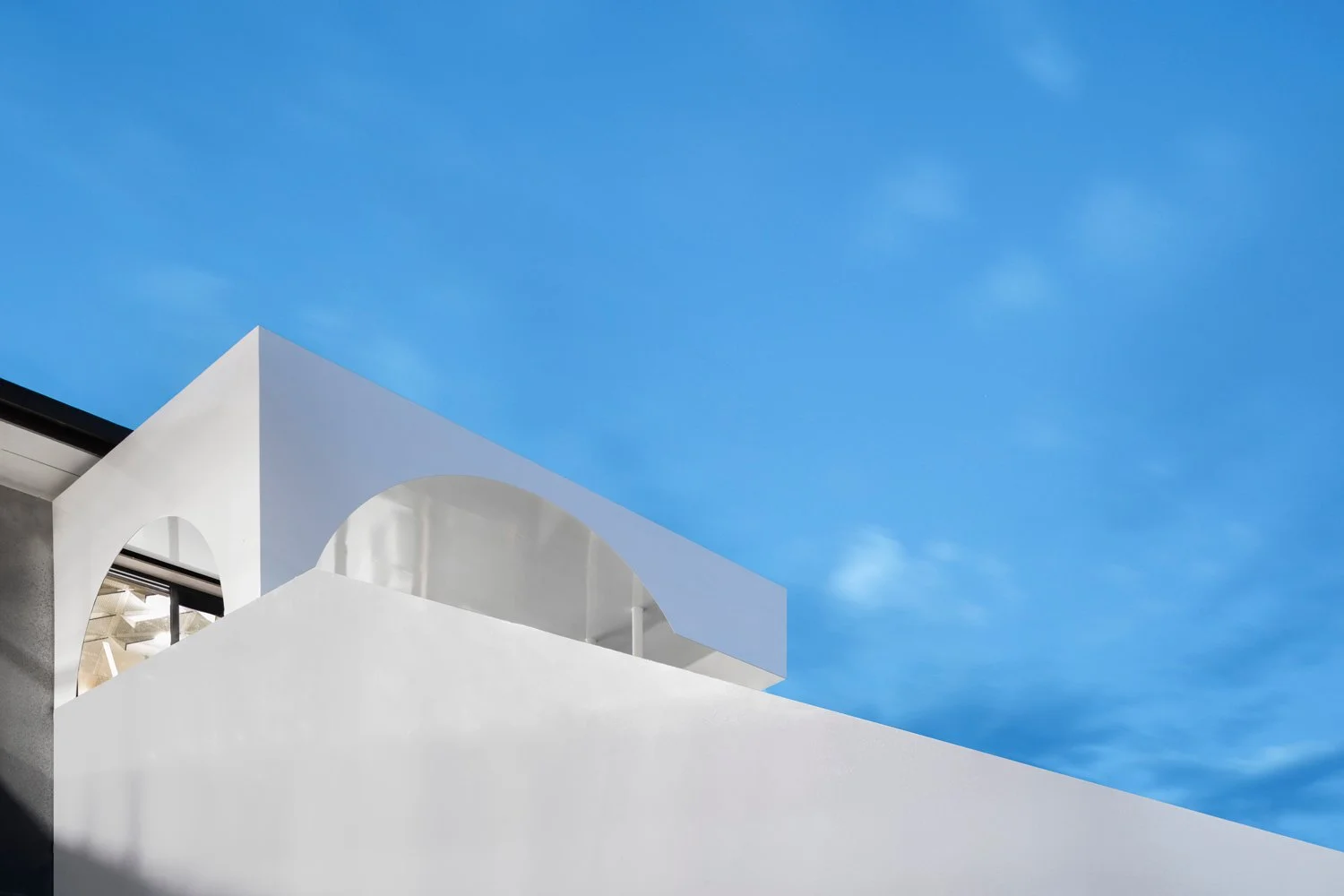
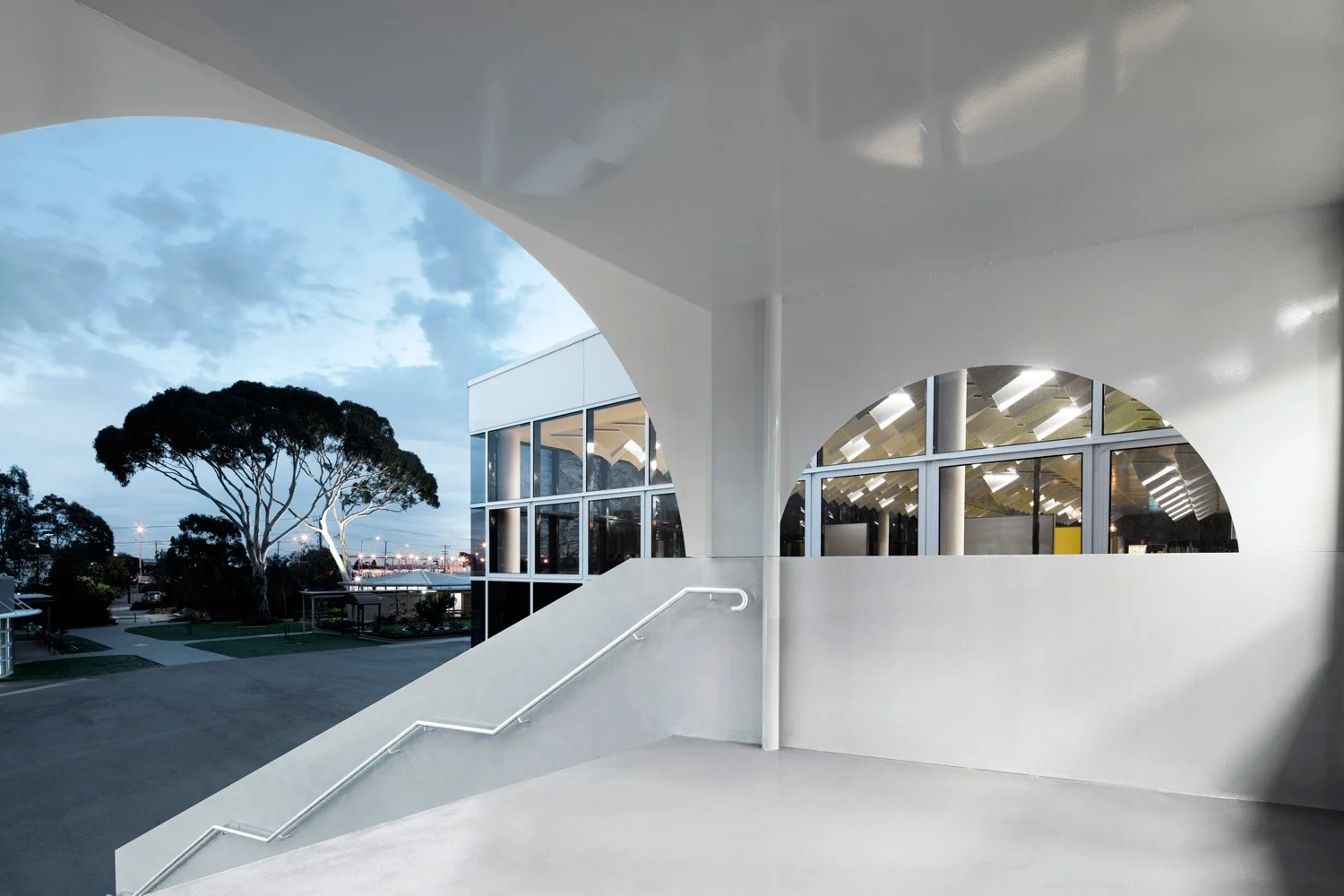
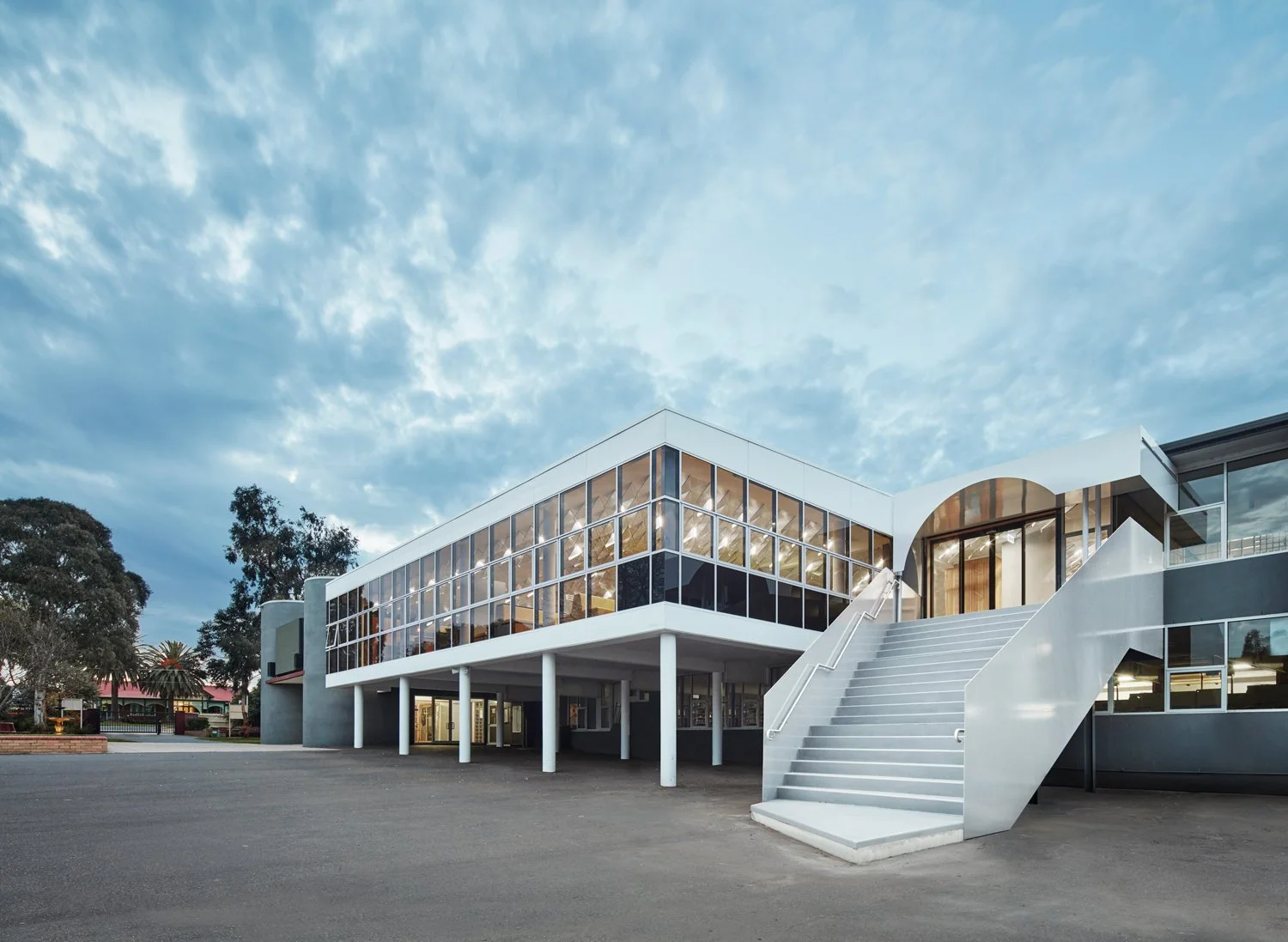
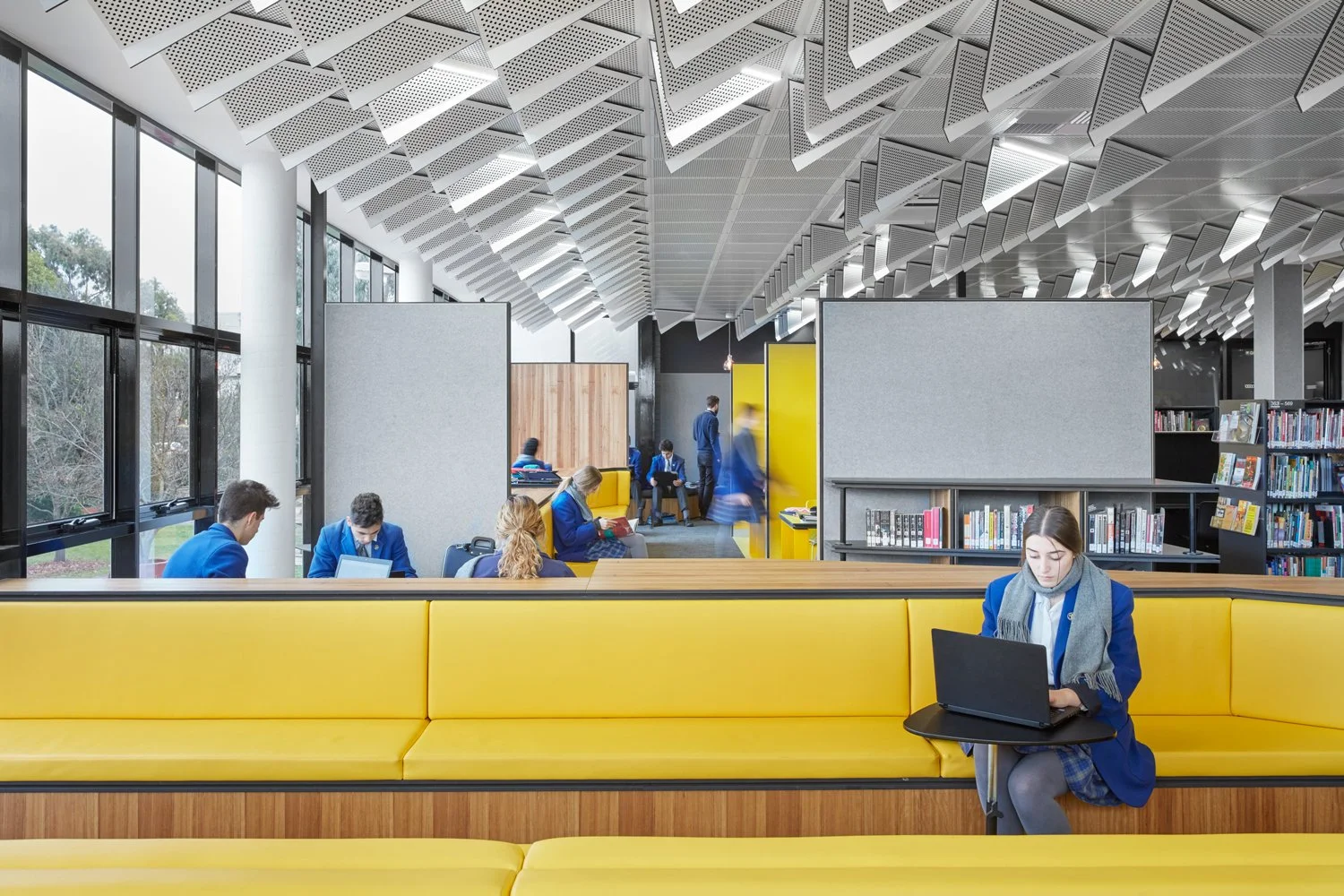
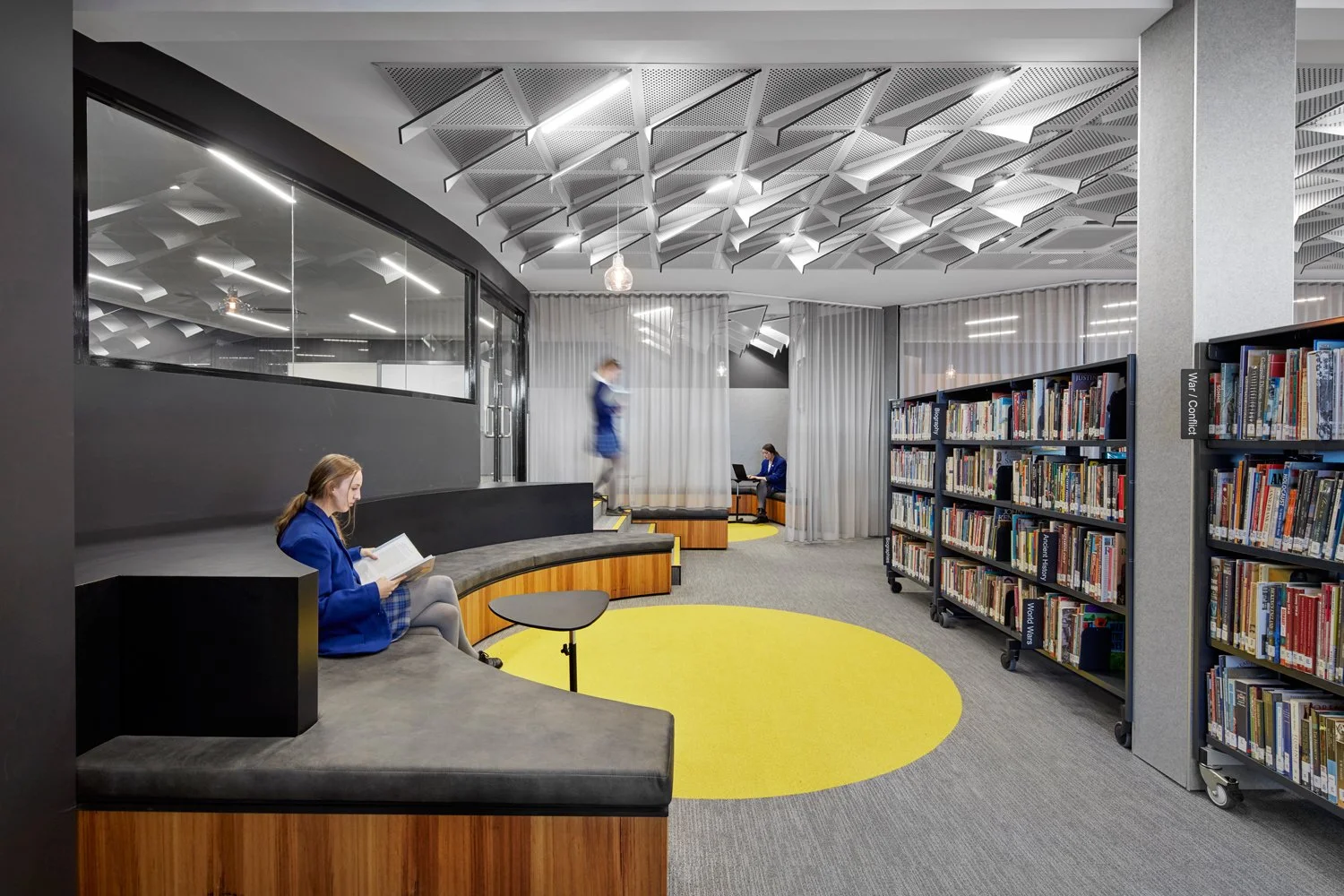
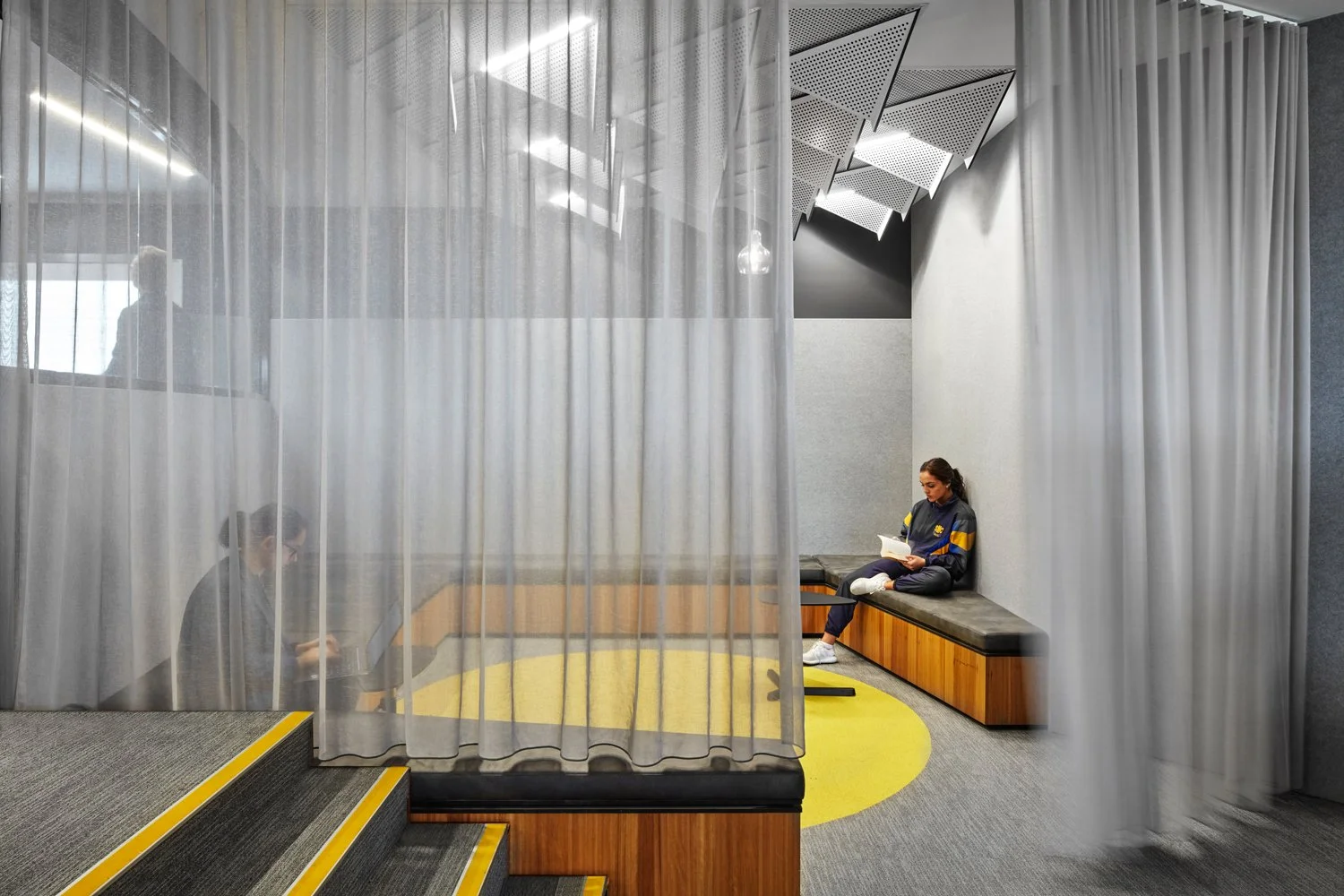
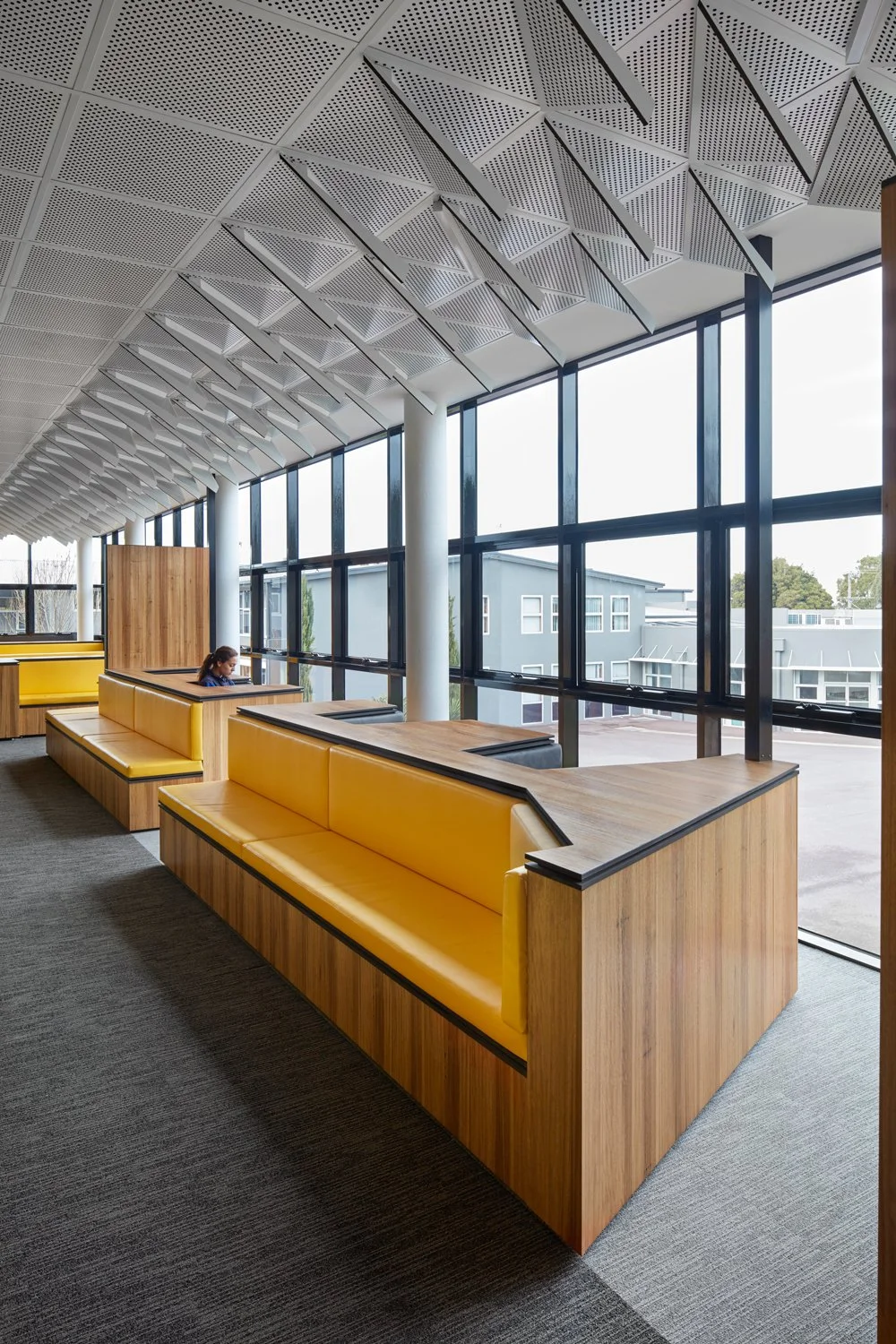
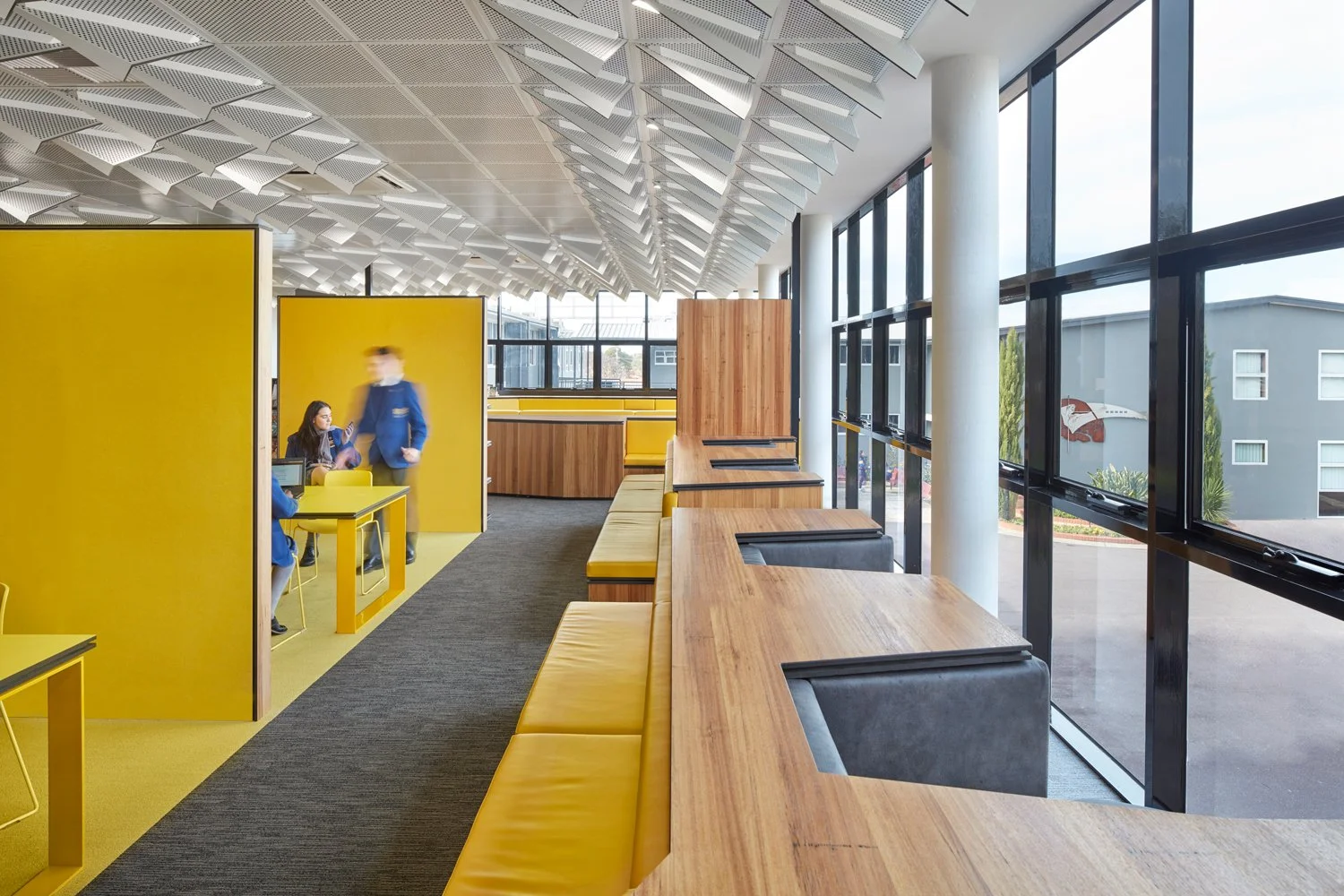
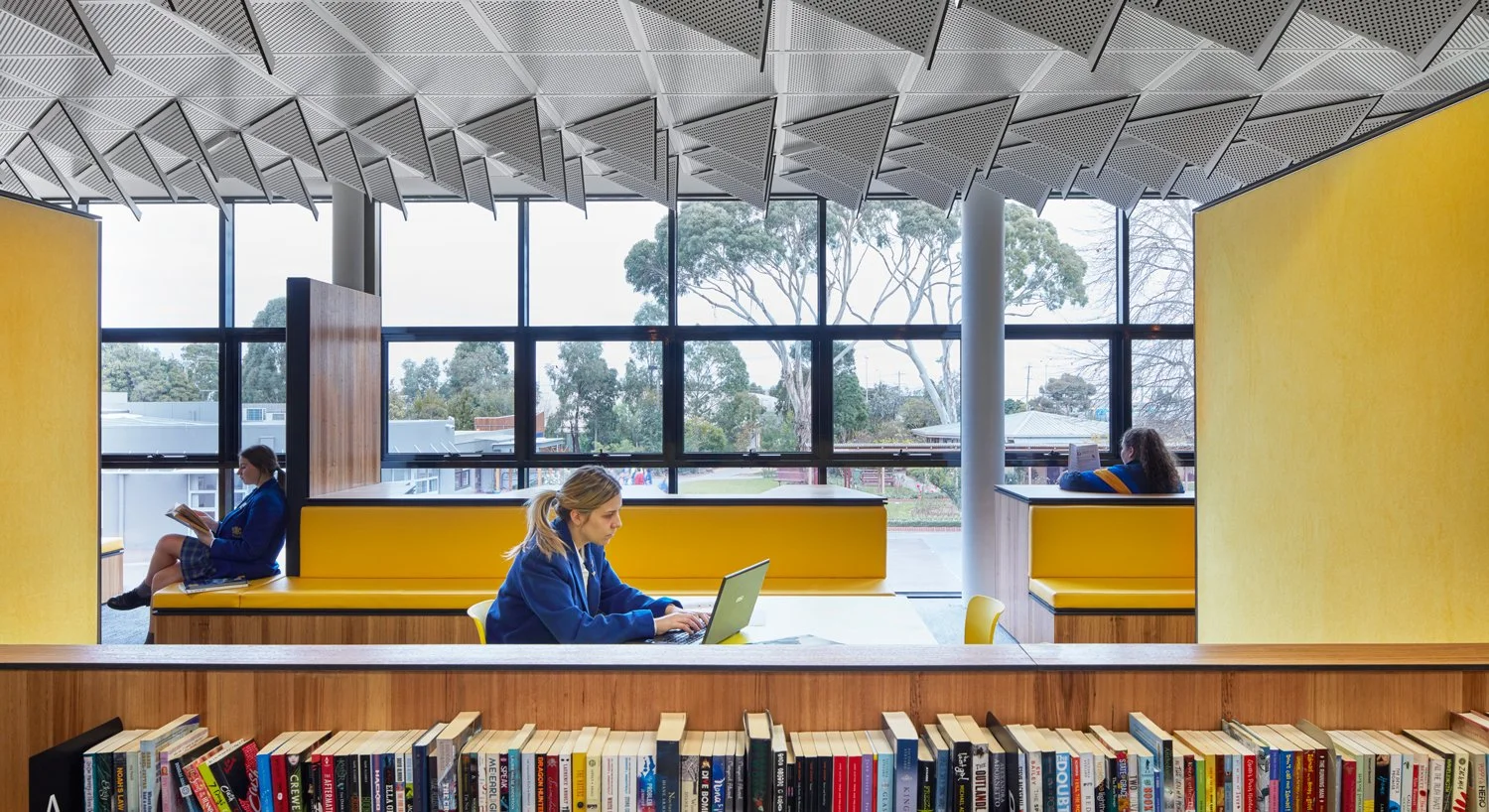
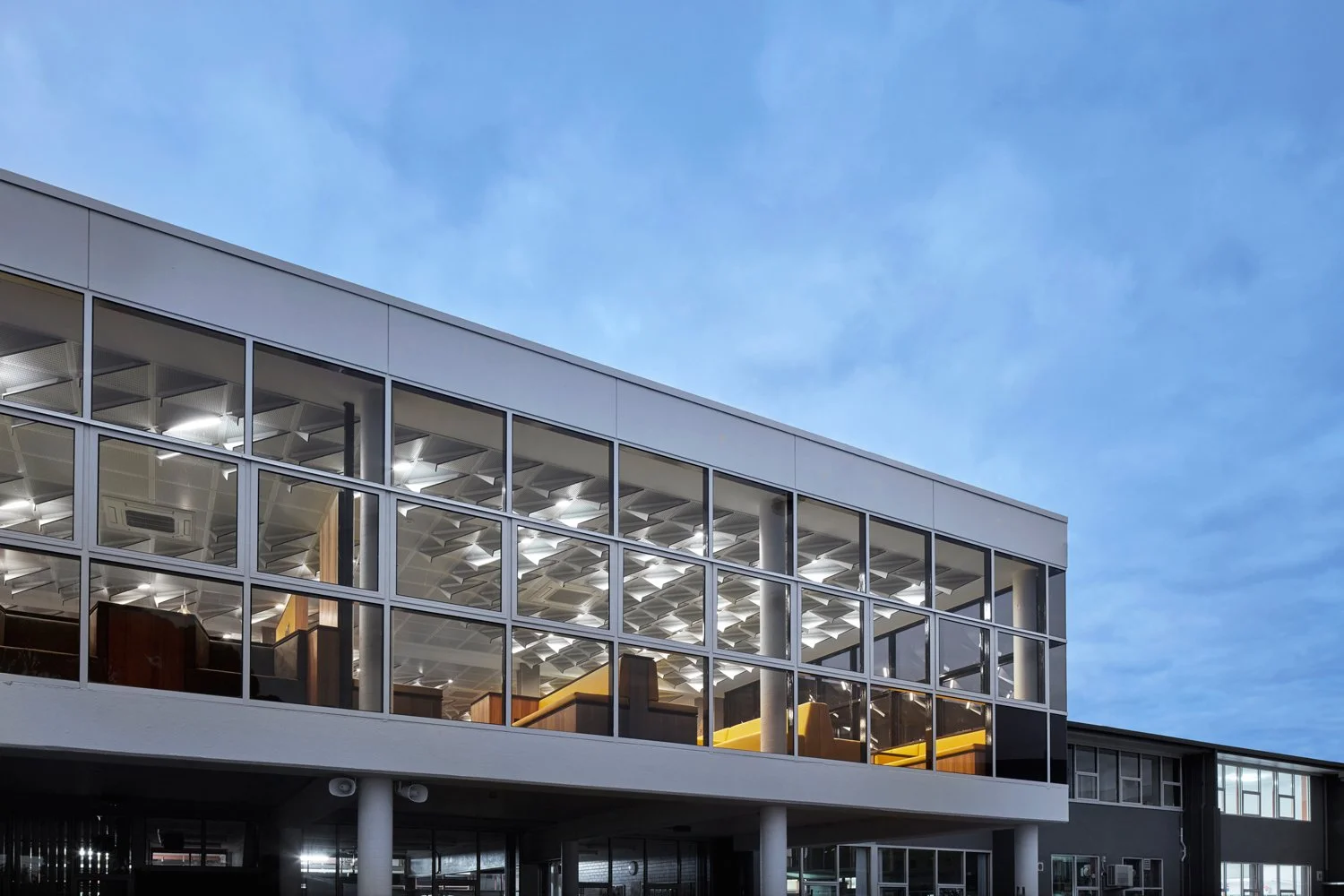
The Quaine Library is located on the senior campus at St Monica`s College in Melbourne. The existing shell of the building was that of a 1960`s white Modernist inspired ‘box’. Although in great need of savior from its burgundy coloured paint blanket and adhoc additions over the years, the bare bones of the existing shell had the potential of being easily restored to its former glory through the removal of these additions and a simple coat of white paint.
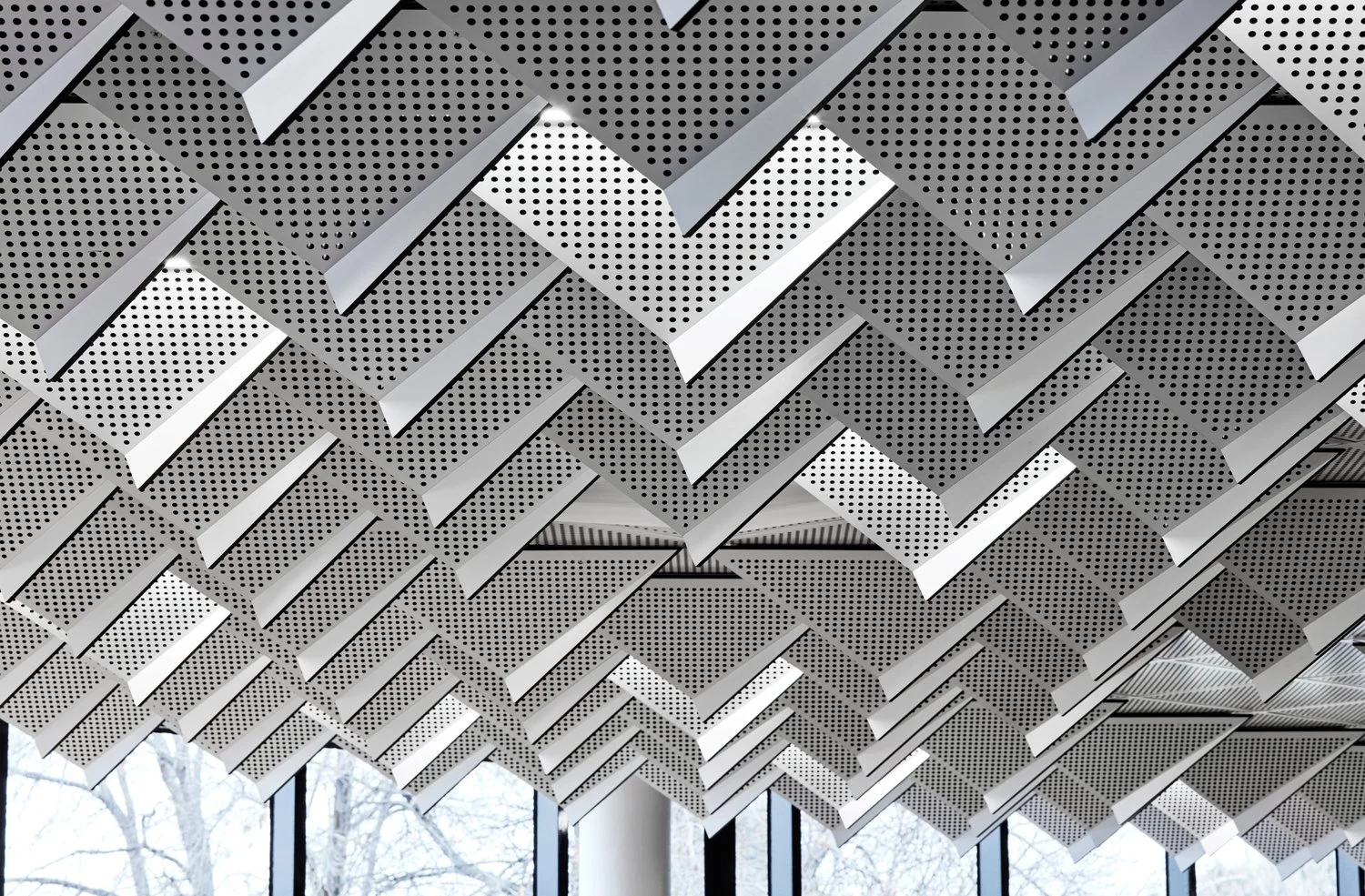
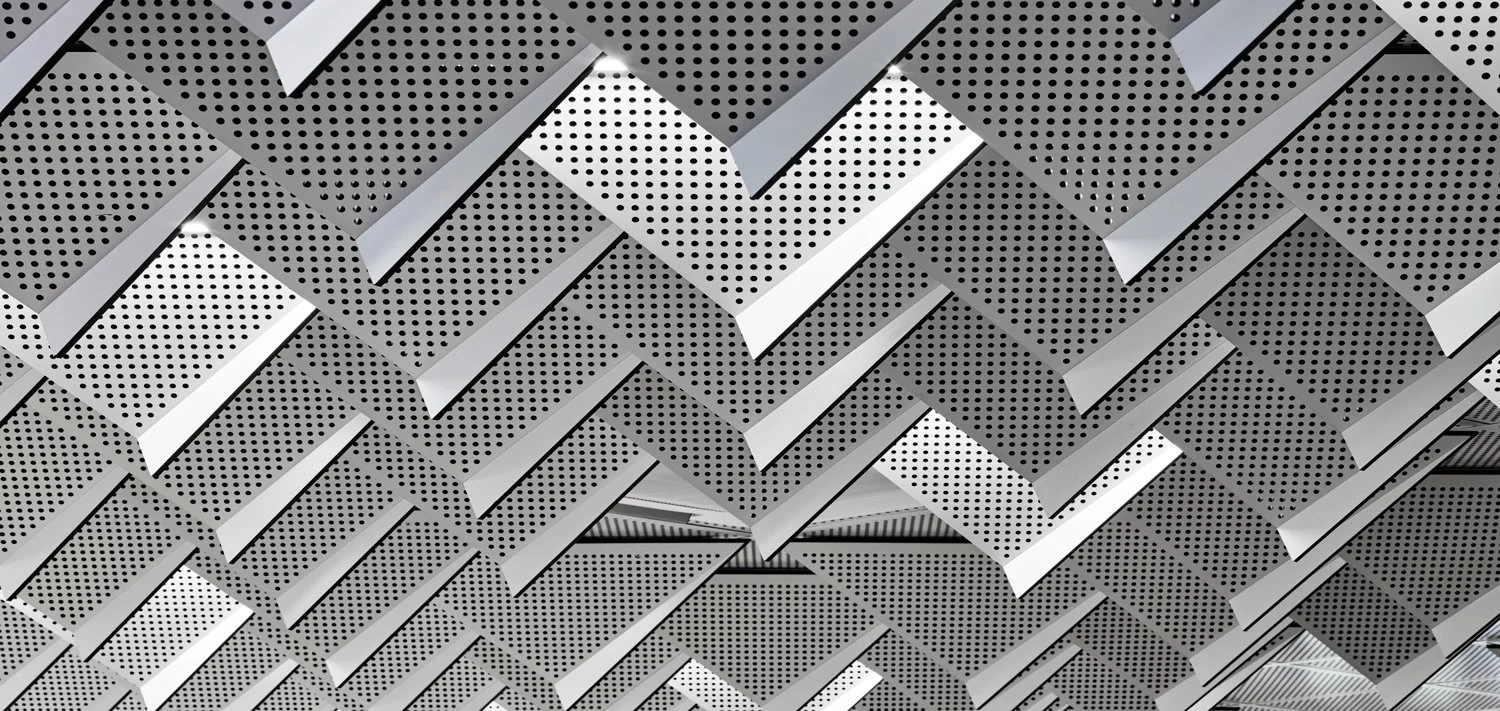
Robert Rauschenberg’s ‘White’ series works of 1951 played a key role in the evolution of the ceiling from this point onwards. Rauschenberg`s work in this series were all typically uniform in size, modular and of course contained a pristine white colour surface. The works were often configured in a number of panels [1-7] using subtle shifts in a repetitious modularity to create light and shadow play through what appeared almost en bloc rather than individual canvases. Rauschenberg described the series in May 1999 as ‘Clocks’ as they had the ability to display the time of day, the weather outside and how many people were in the room based on the shadows qualities projected on them.
-
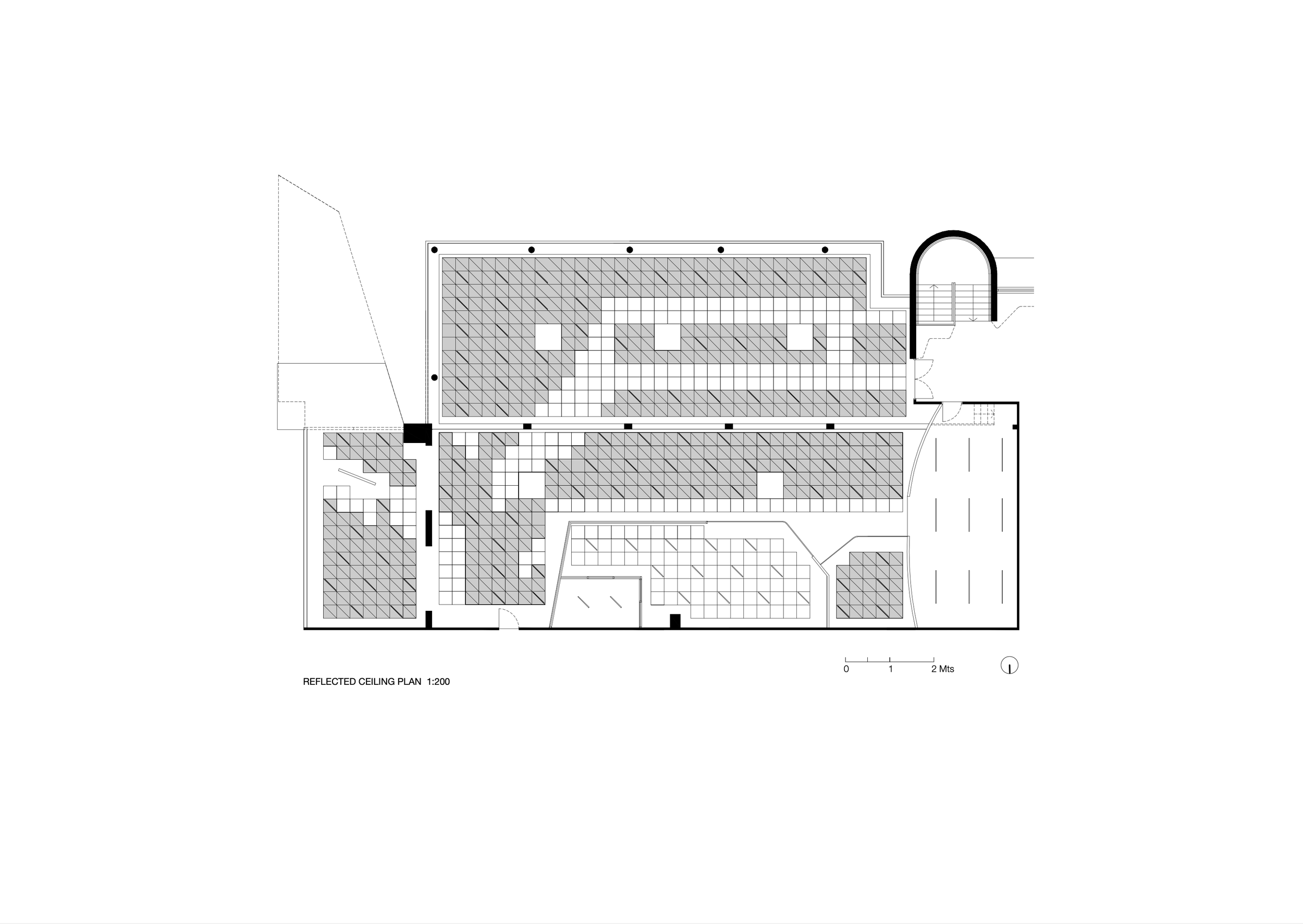
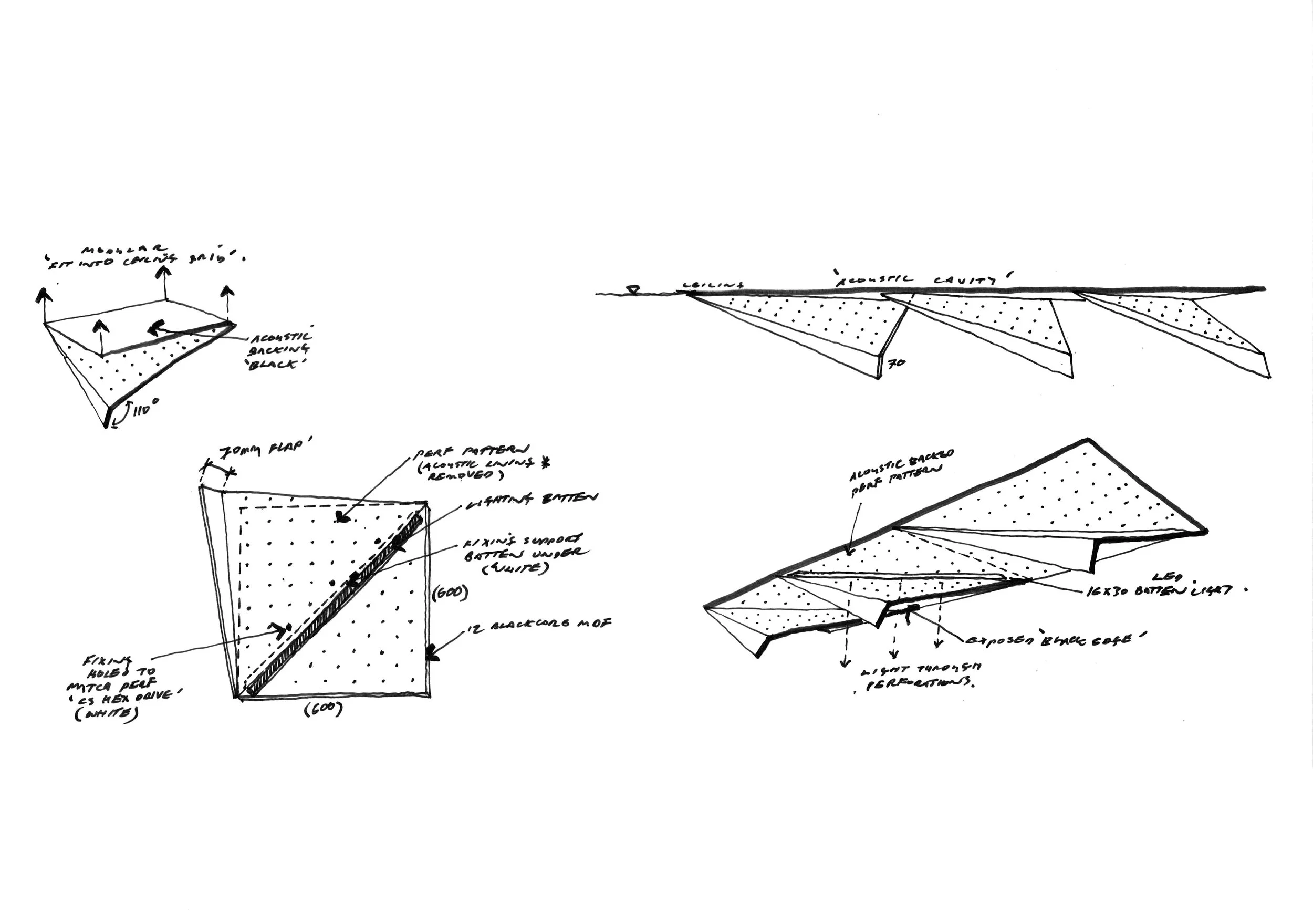
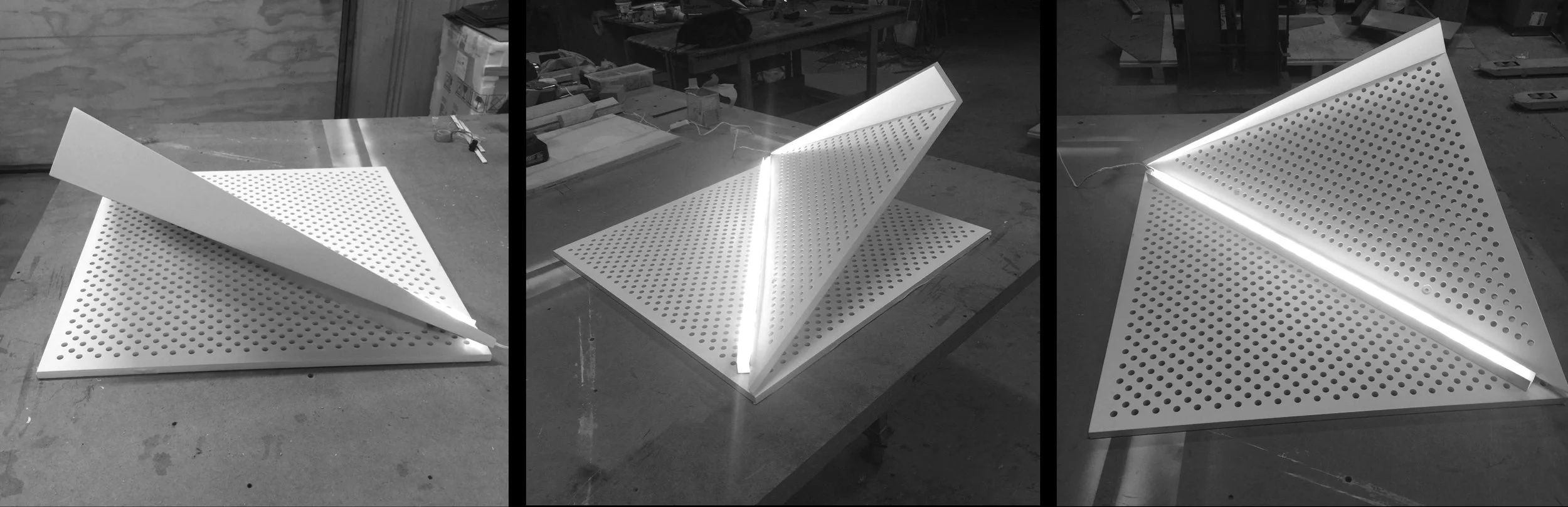
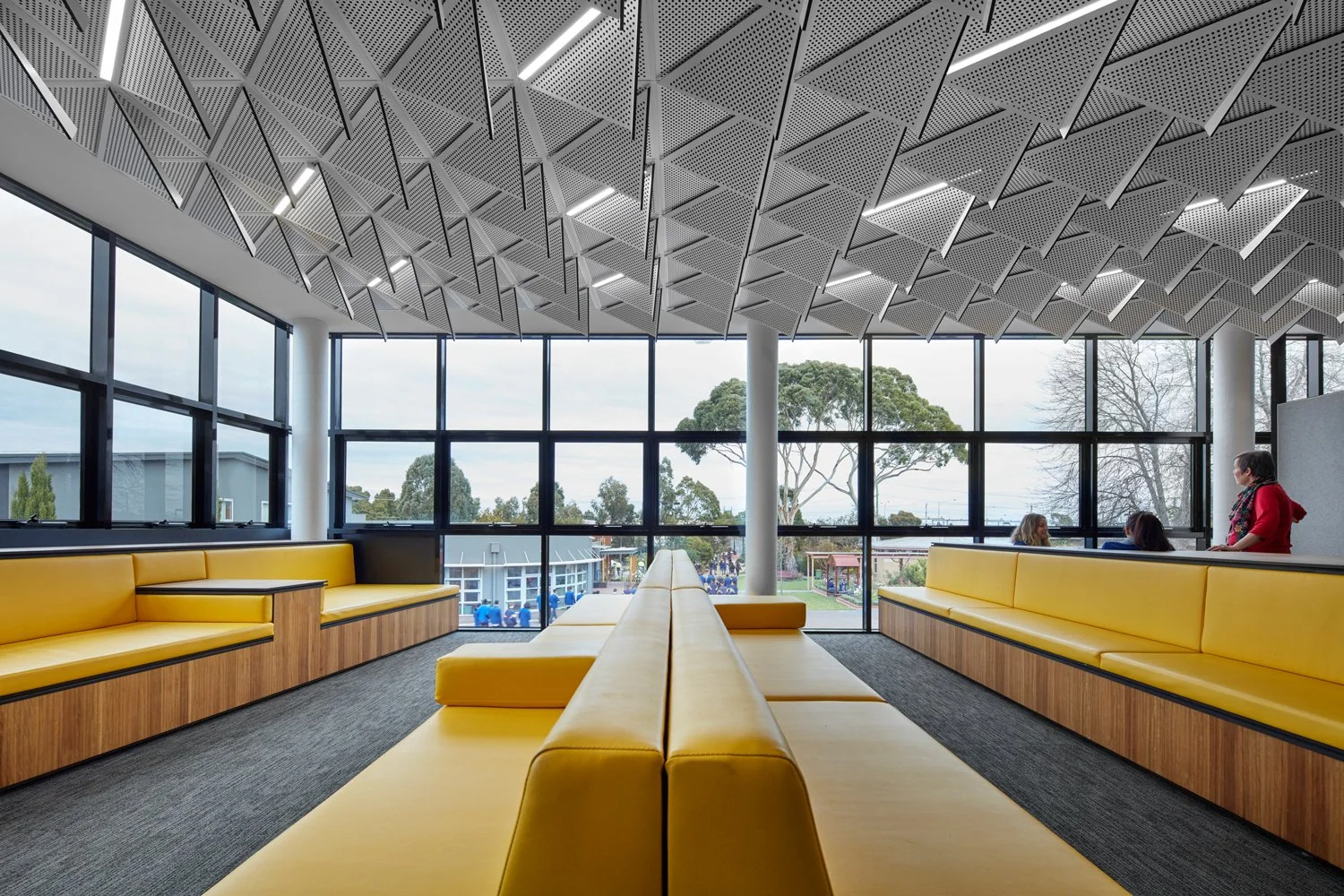
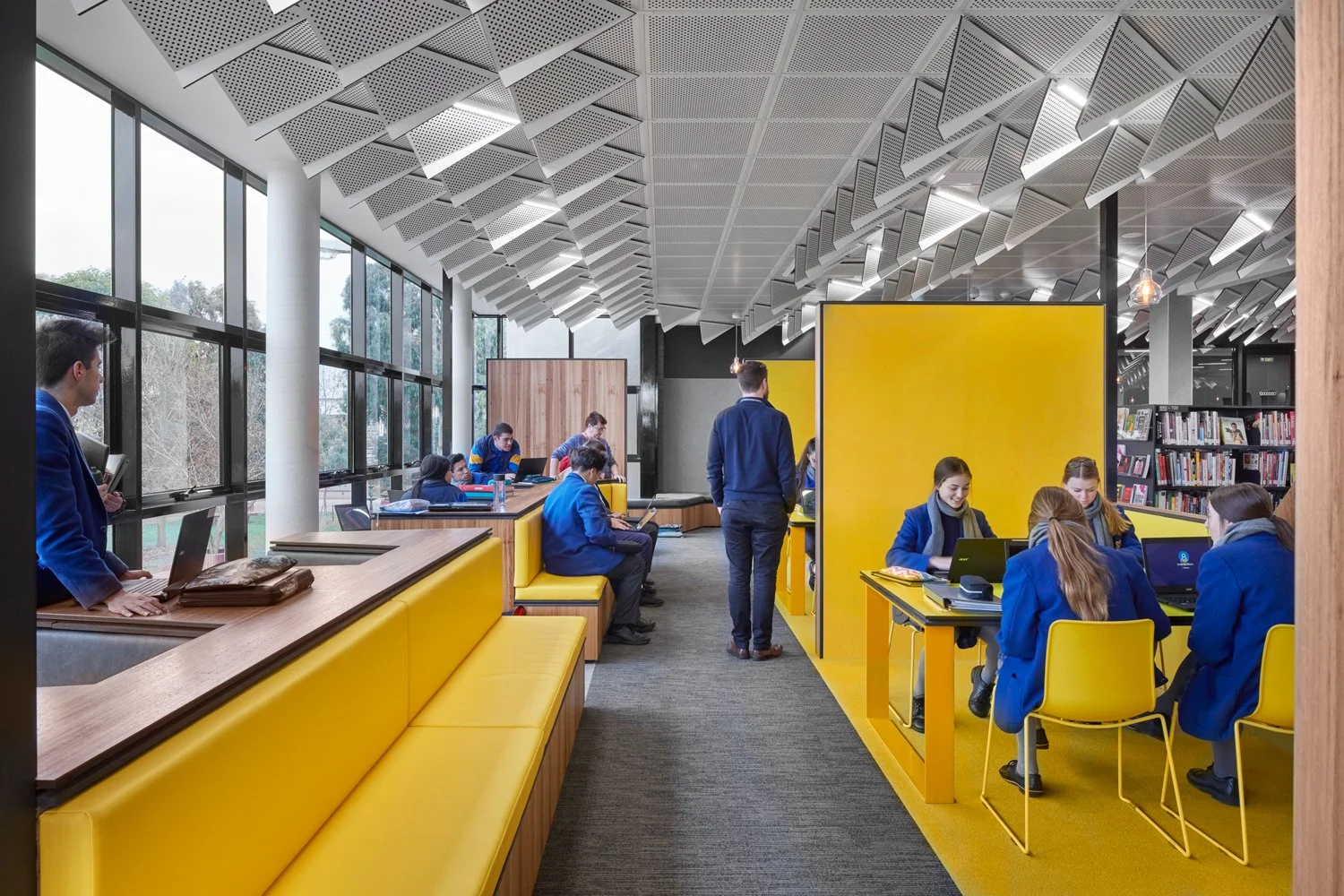
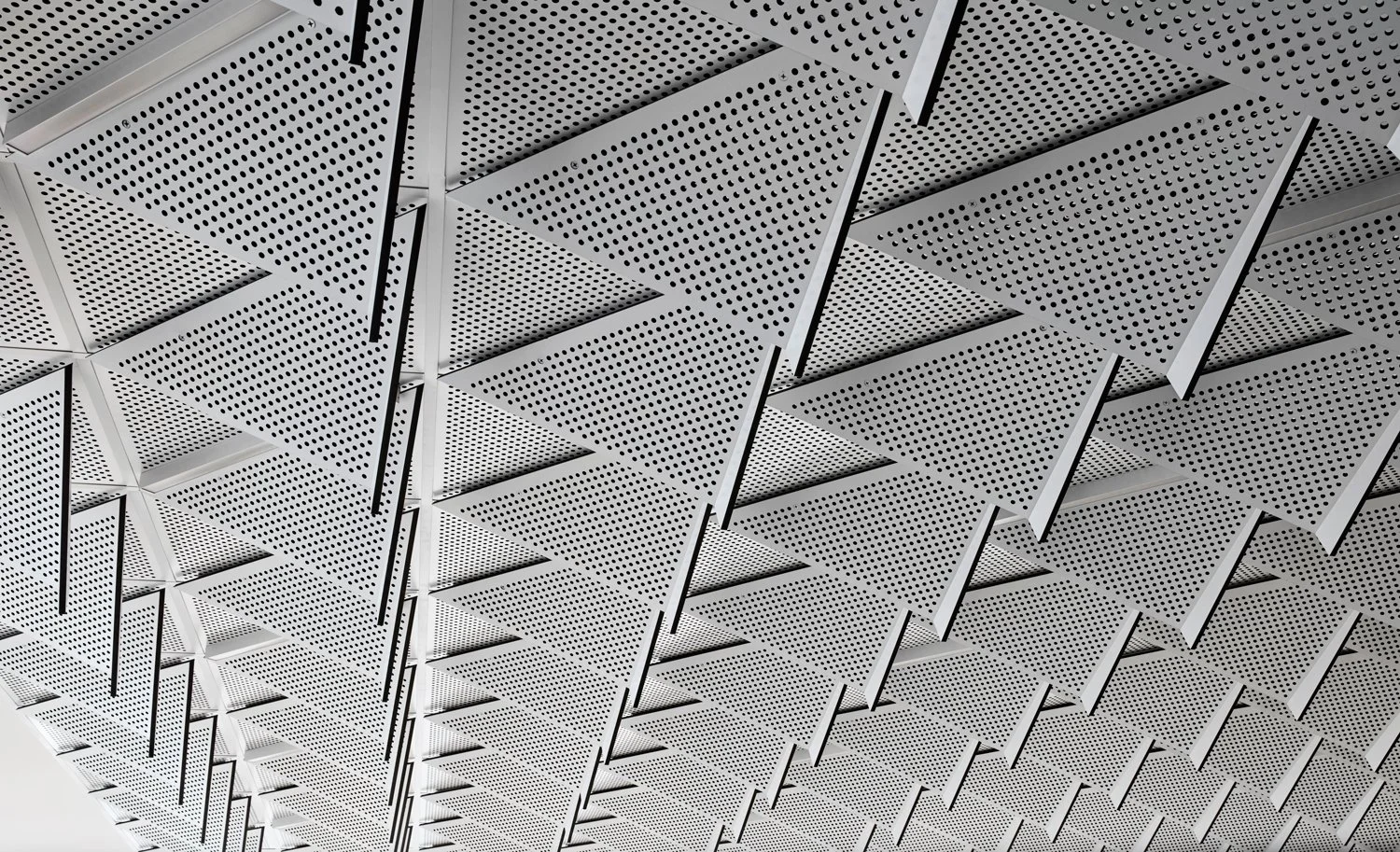
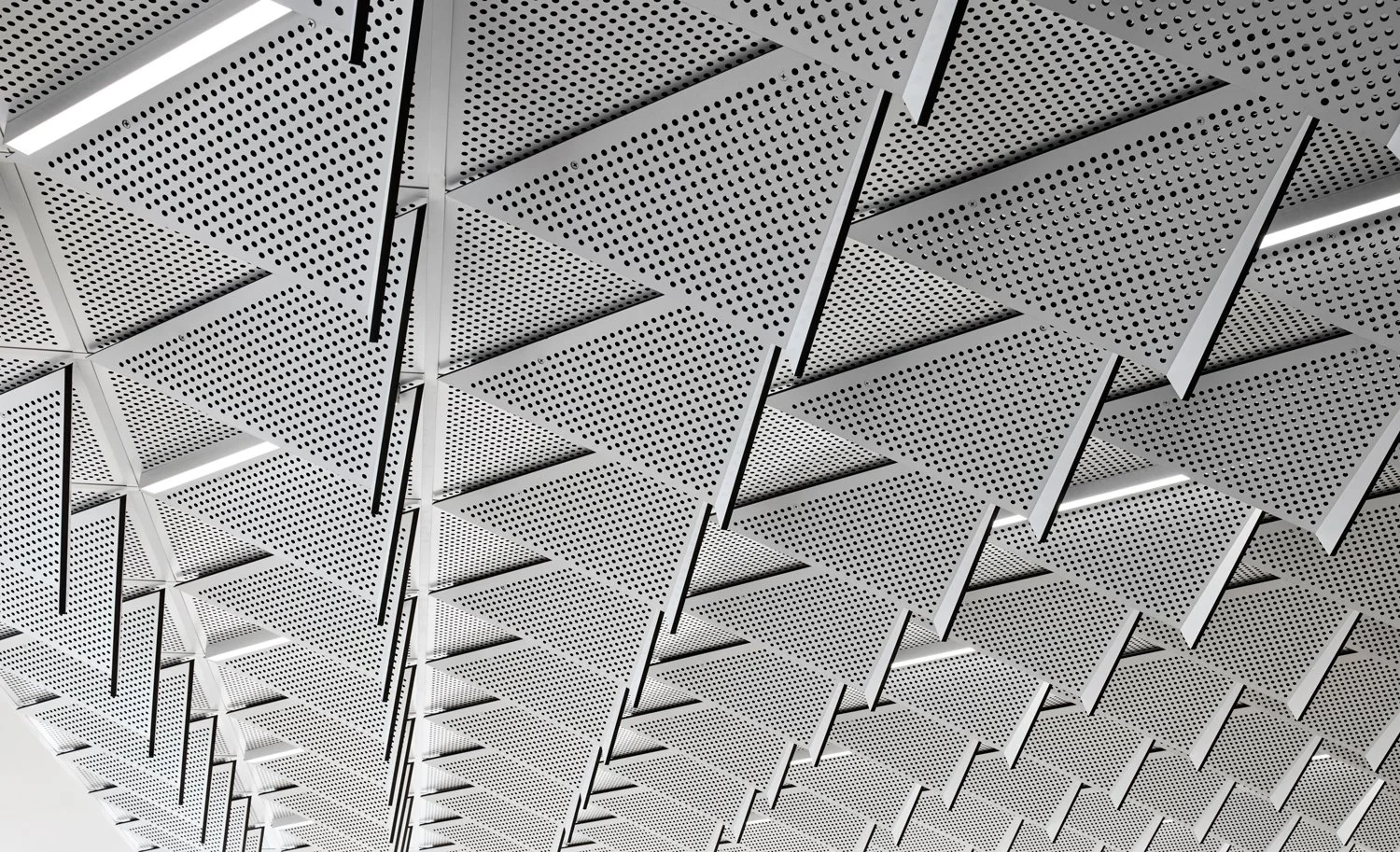
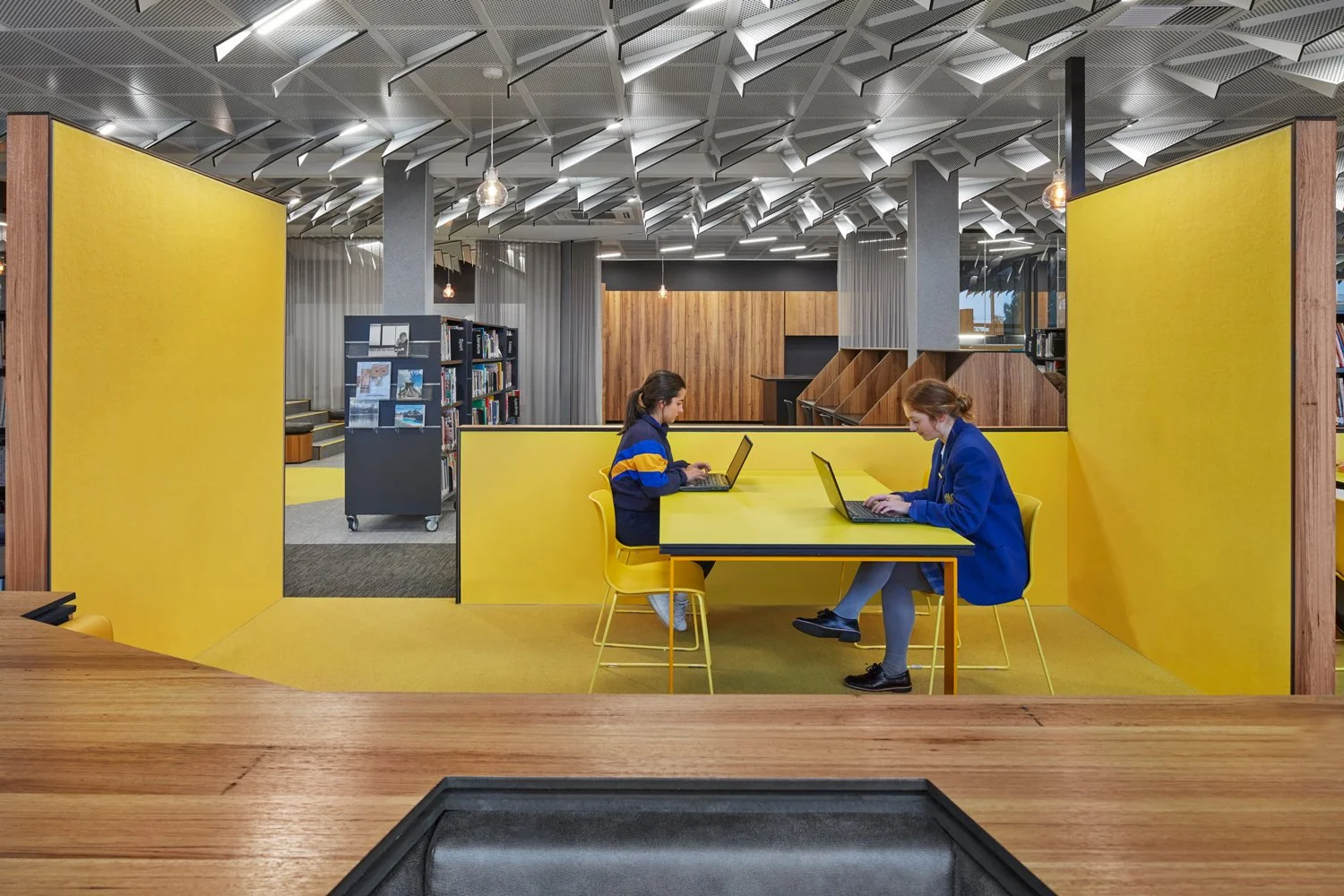
Our ceiling panel was conceived with this line of thinking. A repetitious acoustic ceiling panel was inserted into a fairly utilitarian, standard 600x600 ceiling grid system. A perforated triangular piece exactly one half of the overall panel, is fixed diagonally through the centre and has a small tapered, 30mm fin projected off the end at 110 degrees. The singular operation in the ‘fold’ in the panel on mass creates a series of quite varying conditions both in form, light and shadow across the landscape of the ceiling. From one angle, there are quite dynamic elements of the triangulated crystalline and then an ornamental feathering & flattening on another. There is an overlap between the romanticism of the decorative and the utilitarianism of Modernism. Conceptually we see the ceiling as the Neo-Dada interpretation of the Sistine Chapel ceiling.
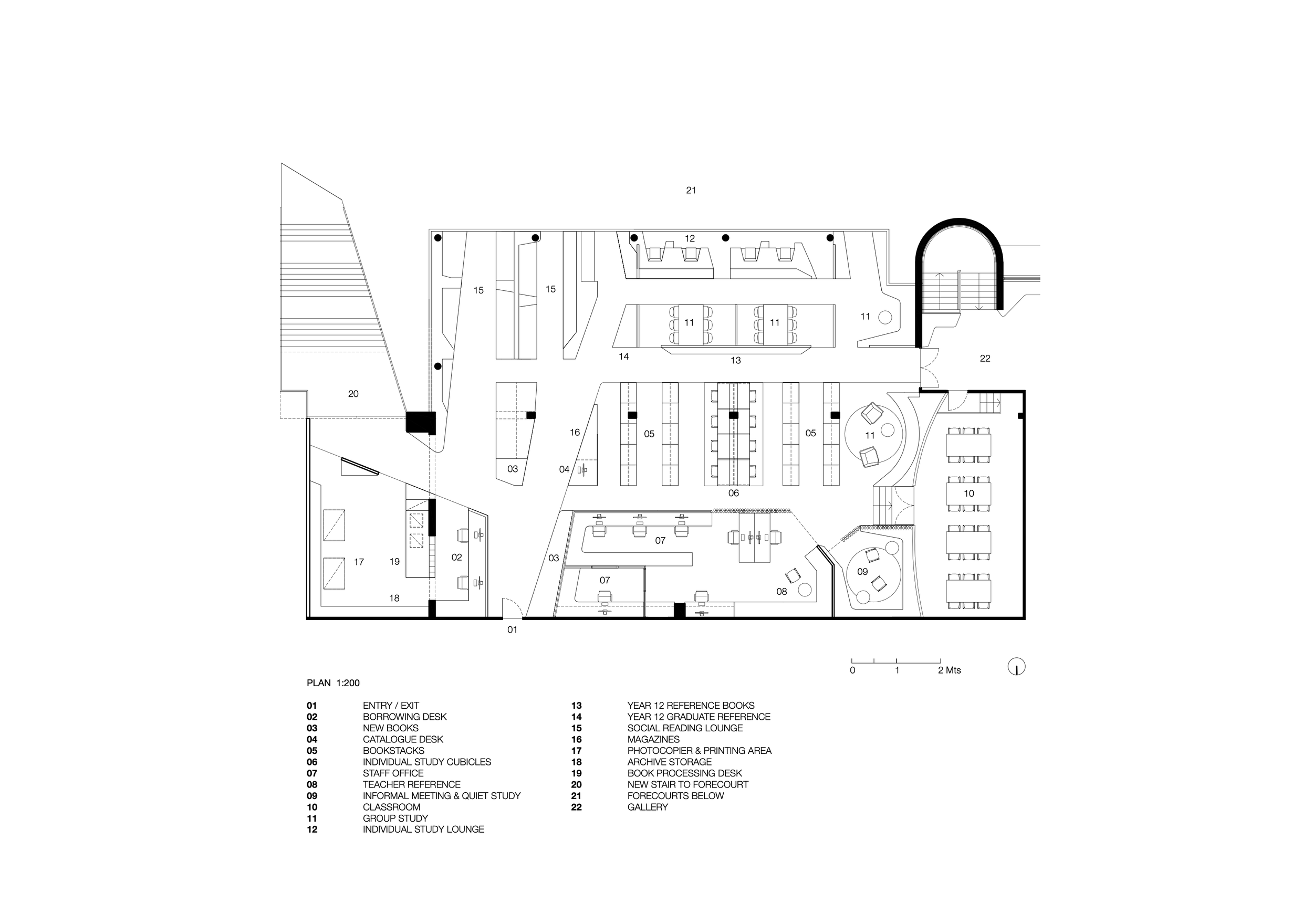
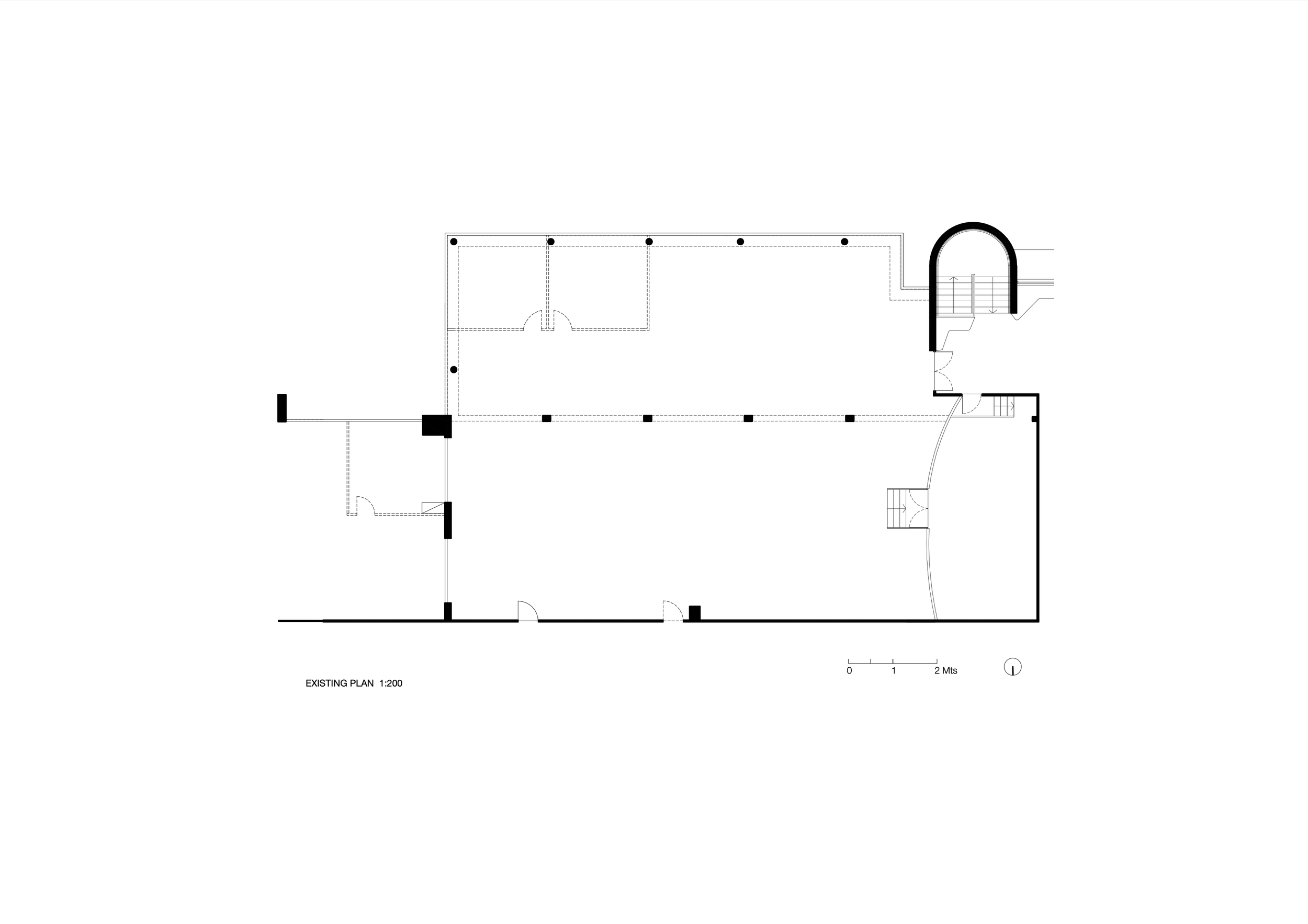
Internally the existing space was a single continuous open-area, not very conducive to the function of multiple library area conditions required within one space.
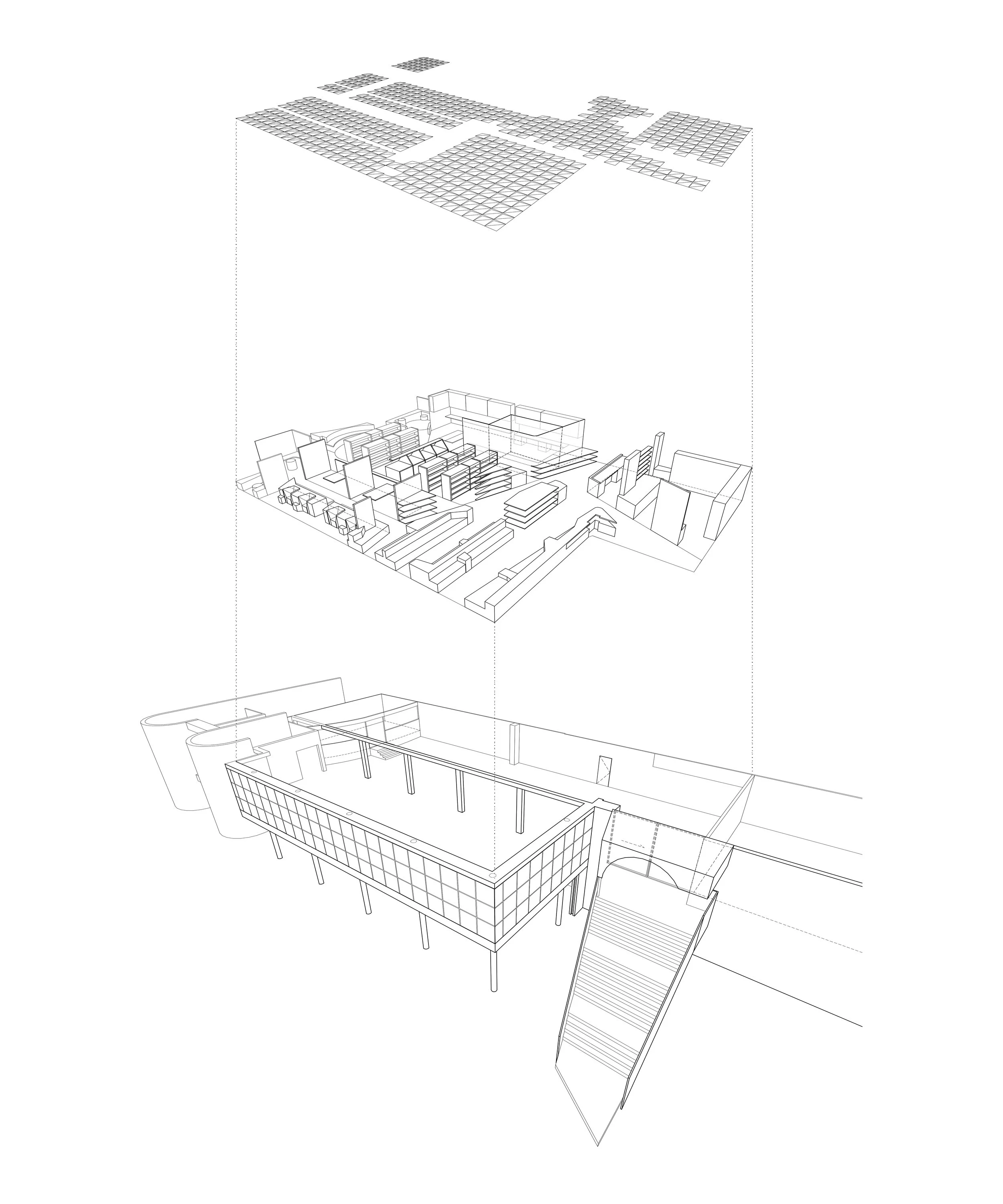
Given this existing condition, the spatial evolution of the project needed to be one created through vertical relationships between the insertion of joinery interventions and a relative ceiling condition in order to create a sense of holistic continuity and importantly improved acoustic conditions.We initially, quite rigorously looked at the history of the ceiling as an architectural element over the years. Specifically, we were interested in the decorative frescoed ceilings of high Renaissance art such as the Sistine Chapel and the opulent wood inlay ceilings of projects such as the Scuola Grande di san Marco in Venice. The combination of the two ceilings gave us a starting point to think about how we could celebrate these elements through contemporary translation.
Each of the 580, folding white, perforated panels was hand-assembled by a pair of local craftsman. Lighting battens were integrated diagonally within the panels for a visual continuity to the ceiling landscape. A series of hung pendant lights were then introduced to give hierarchy to areas of importance.Joinery interventions, primarily clad in rich Australian blackbutt veneer on a black fire-retardant eco-mdf sub-straight, were conceived around the notion of creating multiple conditions for different student needs. Some of these include: Individual seating units, a reading lounge for larger groups and lunchtime gatherings, group study desks, individual study booths and more private and quiet corner ‘nooks’.
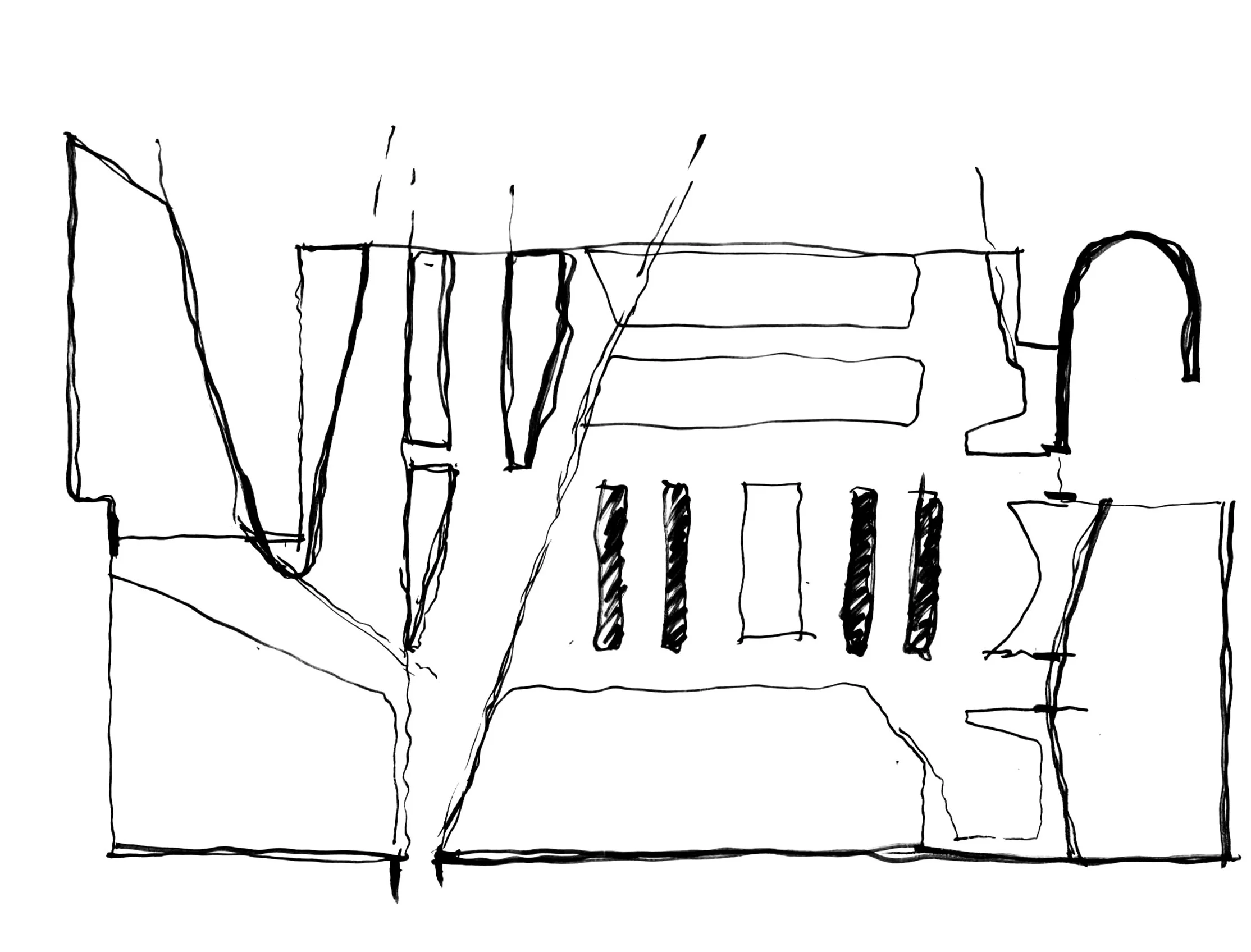
One of the key drivers of the project was to break down barriers between staff and students in order to improve social interaction. Program is ordered planometrically in a bar-code configuration allowing as much light as possible to reach the back of library given its south facing orientation. The plan configuration [running north-south] also creates a passive visual connection between staff and students at all times. A centrally located staff ‘base’ is primarily clad in glass with parts in sheer fabric to create an un-interrupted visual narrative and potential for an improved connection between staff and student interactions. Book processing areas are purposely curated adjacent to student copying areas to further create opportunity for staff & student interaction.
Prior to taking on the project, we visually witnessed students getting into trouble for being in internal corridors during lunch and recess, which at that point was the only point of access to the library. As a result and our addition to the client brief, we proposed a new external stair and canopy to be introduced to link the Library to adjacent forecourts allowing students to have direct & complete access to the library during an entire school day.
Formally the stair takes formal cues from Modernist traditions and creates a visual narrative with the existing building, its interior forms and the nearby surrounding landscape. The introduction of the stair will play a key role logistically and pedagogically grounding the Library back to its rightful place as the heart of the senior campus.
Data and Credits
Scope: Architecture & Interiors
Typology: Educational - College Library
Cost: $2mil AUD
GFA: 500 sqm
Services: Full Architectural Services
Completed: 2017
[Designed and completed whilst director & design director of
Branch Studio Architects]
Structural Engineer: OPS
Building Surveyor: Michel Group
Builder: SMC Builders
External Stair: SP McLean Engineering
Photography: Peter Clarke
Drawings